Colorado Springs drivers don’t need much convincing when it comes to hail damage. Living along the Front Range means dealing with unpredictable weather, especially during spring and summer when sudden afternoon storms roll in fast. One minute you’re driving down I-25 under clear skies, and the next, you’re caught in a hailstorm that leaves your hood and roof covered in dents. It’s something we see all the time, and over the years, it’s become a very real and recurring concern for vehicle owners in this area.
Because of how frequent these storms are, hail damage repair isn’t just an occasional fix, it’s part of owning a car here. That’s where paintless dent repair, or PDR, starts to make a lot of sense. Instead of going through lengthy body shop repairs, more drivers are looking into solutions that are faster, more efficient, and preserve their vehicle’s original condition. Understanding how paintless dent repair works and when it’s the right option is key if you want to handle hail damage the smart way.
What Is Paintless Dent Repair and How Does It Work?
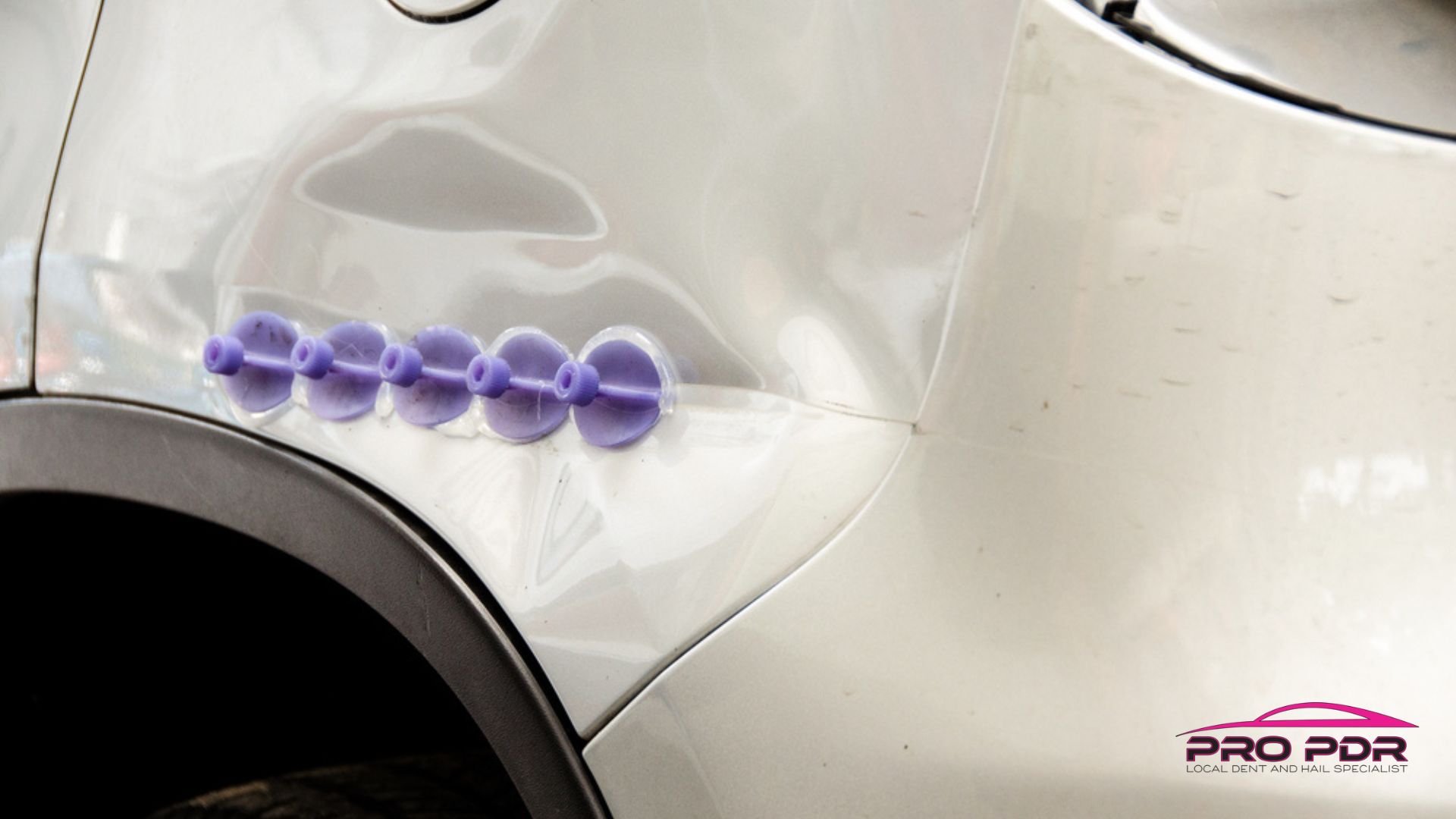
Paintless dent repair is exactly what it sounds like, a method of removing dents without the need for sanding, fillers, or repainting. Instead of altering the surface, the process focuses on carefully reshaping the metal from behind the panel, bringing it back to its original form while keeping the factory paint intact.
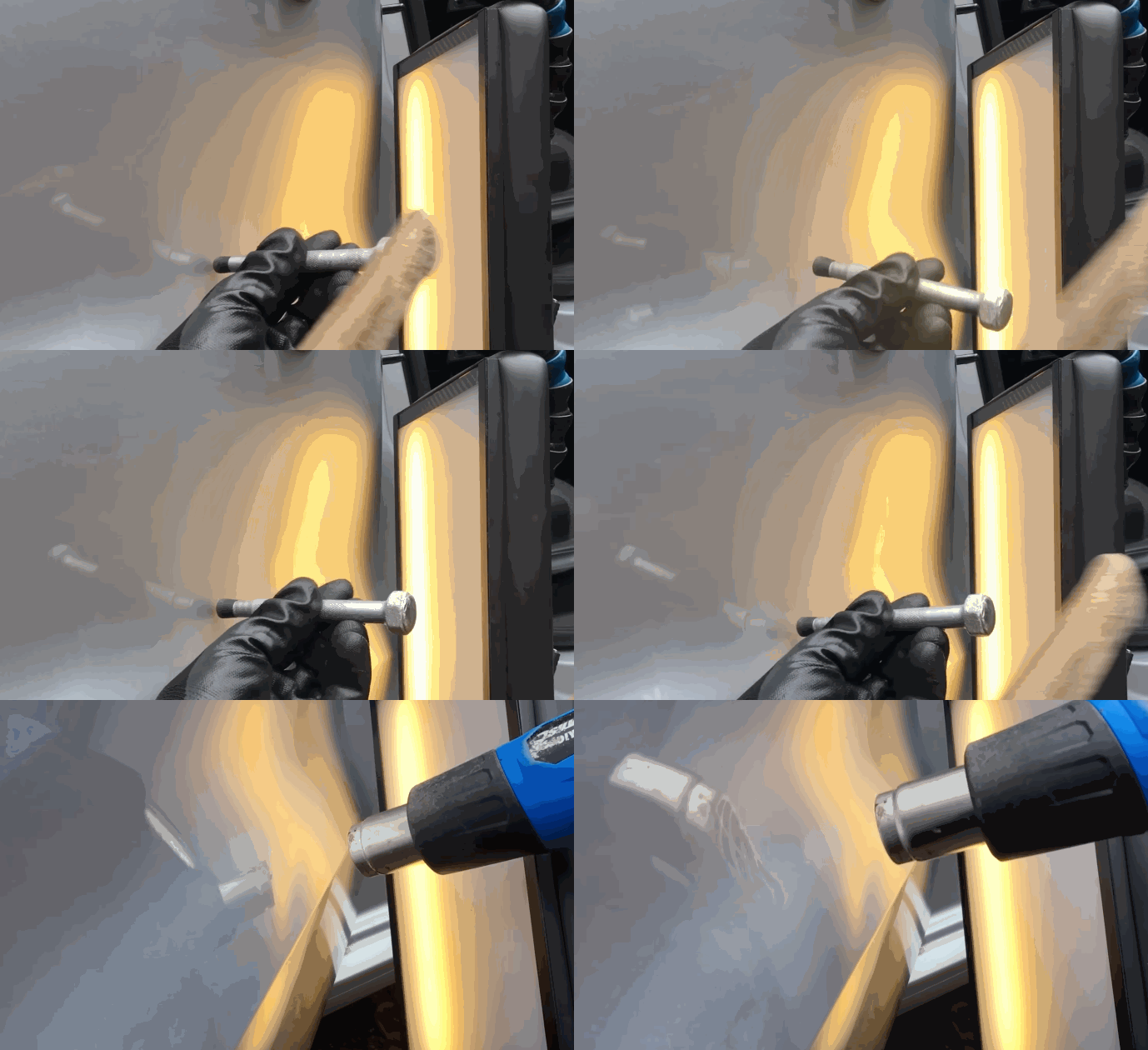
At its core, the paintless dent repair process relies on precision, specialized tools, and a trained eye. Using controlled pressure, technicians work from behind the dent, slowly massaging the metal back into place. It’s a technique that takes experience to master, especially when dealing with multiple dents or working around tight areas like roof rails and body lines.
Here’s how the PDR technique typically works:
- Access is created behind the damaged panel whenever possible
- Specialized tools are used to gently push or pull the dented area
- Lighting is used to track imperfections and ensure accuracy
- The metal is reshaped gradually without cracking or damaging the paint
- Final refinements are made to restore the panel’s original appearance
What makes this approach stand out compared to traditional repairs is that there’s no need to repaint or replace panels. That means you keep your original factory finish, which is something that matters more than most people realize, especially when it comes to long-term value and consistency across your vehicle.
Why PDR Is Commonly Used for Hail Damage Repairs
Hail damage is one of the most common reasons drivers turn to paintless dent repair, and it’s not by coincidence. Most hail dents are small, shallow, and spread across large areas like the hood, roof, and trunk. That makes them ideal candidates for PDR, since the paint is usually still intact even if the surface looks heavily impacted.
In Colorado Springs, where hailstorms can affect entire neighborhoods in a matter of minutes, it’s common for vehicles to come in with dozens, sometimes hundreds, of dents. Traditional repair methods would require extensive bodywork and repainting, but PDR allows us to address that kind of widespread damage in a much more efficient way.
From what we see every season, PDR for hail damage stands out for a few key reasons:
- It allows multiple dents to be repaired without repainting entire panels
- It significantly reduces repair time compared to conventional methods
- It preserves the original paint, which is often still in good condition
- It’s a practical solution for large-scale hail damage across multiple panels
For local drivers dealing with frequent storms and unpredictable weather, this approach simply makes sense. It’s not just about fixing the dents, it’s about doing it in a way that fits the reality of driving in Colorado Springs.
The Benefits of Paintless Dent Repair Over Traditional Methods
When comparing paintless dent repair to traditional body shop work, the difference isn’t just in the process, it’s in the overall outcome. Conventional repairs often involve sanding, applying filler, repainting, and sometimes even replacing panels. While that may be necessary in certain cases, it also adds time, cost, and complexity.
With PDR, the goal is to restore the panel without altering what’s already working. If the paint is still intact, there’s no reason to replace it. That philosophy is what makes paintless dent repair such a strong option for many types of damage, especially hail.
Some of the most important benefits of PDR include:
- No repainting required, which helps preserve the original factory finish
- Faster turnaround times, often getting you back on the road sooner
- More cost-effective compared to traditional body shop repairs
- Maintains vehicle resale value by avoiding aftermarket paintwork
- Environmentally friendly, since no chemicals or paint products are used
From our perspective, it’s not about saying one method is always better than the other. It’s about choosing the right approach for the type of damage you’re dealing with, and in many hail damage scenarios, paintless dent repair offers clear advantages.
When Paintless Dent Repair Might Not Be the Right Solution
As effective as paintless dent repair is, it’s important to be clear that it’s not the right solution for every situation. There are certain types of damage where PDR simply isn’t the best option, and being upfront about that is part of doing things the right way.
For example, if a dent is too deep, has sharp creases, or if the paint has already been cracked or chipped, the repair process becomes more complicated. In those cases, traditional methods may be necessary to properly restore the panel.
Some common limitations of PDR include:
- Deep dents where the metal has been significantly stretched
- Sharp creases that affect the structure of the panel
- Areas where the paint has been damaged or compromised
- Dents located in hard-to-access sections of the vehicle
That’s why a proper inspection matters. Every vehicle and every dent is different, and the only way to determine whether paintless dent repair is the right solution is through a professional evaluation. In many cases, PDR works incredibly well, but when it doesn’t, it’s better to know upfront and choose the right repair path from the start.
Why Working with a Local PDR Specialist in Colorado Springs Matters
Not all hail damage is the same, and that’s something you really start to understand when you’ve worked on vehicles across different parts of Colorado. Here in Colorado Springs, the combination of elevation, rapid weather shifts, and intense storm cells coming off the Rockies creates very specific types of dent patterns. It’s not just about fixing dents, it’s about knowing how those dents were formed in the first place.
A local PDR specialist understands how hail behaves in this region. Storms can hit areas like Powers Boulevard or Garden of the Gods Road with different intensity depending on wind direction and altitude changes. That translates into different dent sizes, impact angles, and panel stress, all of which matter when performing paintless dent repair correctly.
At Pro PDR, this is something we deal with every season. Being based in Colorado Springs means we’re not guessing, we’re working with real, local experience. That allows us to assess damage more accurately and recommend the right approach for each vehicle. When you’re looking for paintless dent repair in Colorado Springs, working with a team that understands local hail repair conditions makes a noticeable difference in the final result.
💡 Curious about the cost of Paintless Dent Repair in Colorado Springs? Visit our main page for detailed pricing and estimates.
What to Expect from a Professional PDR Service
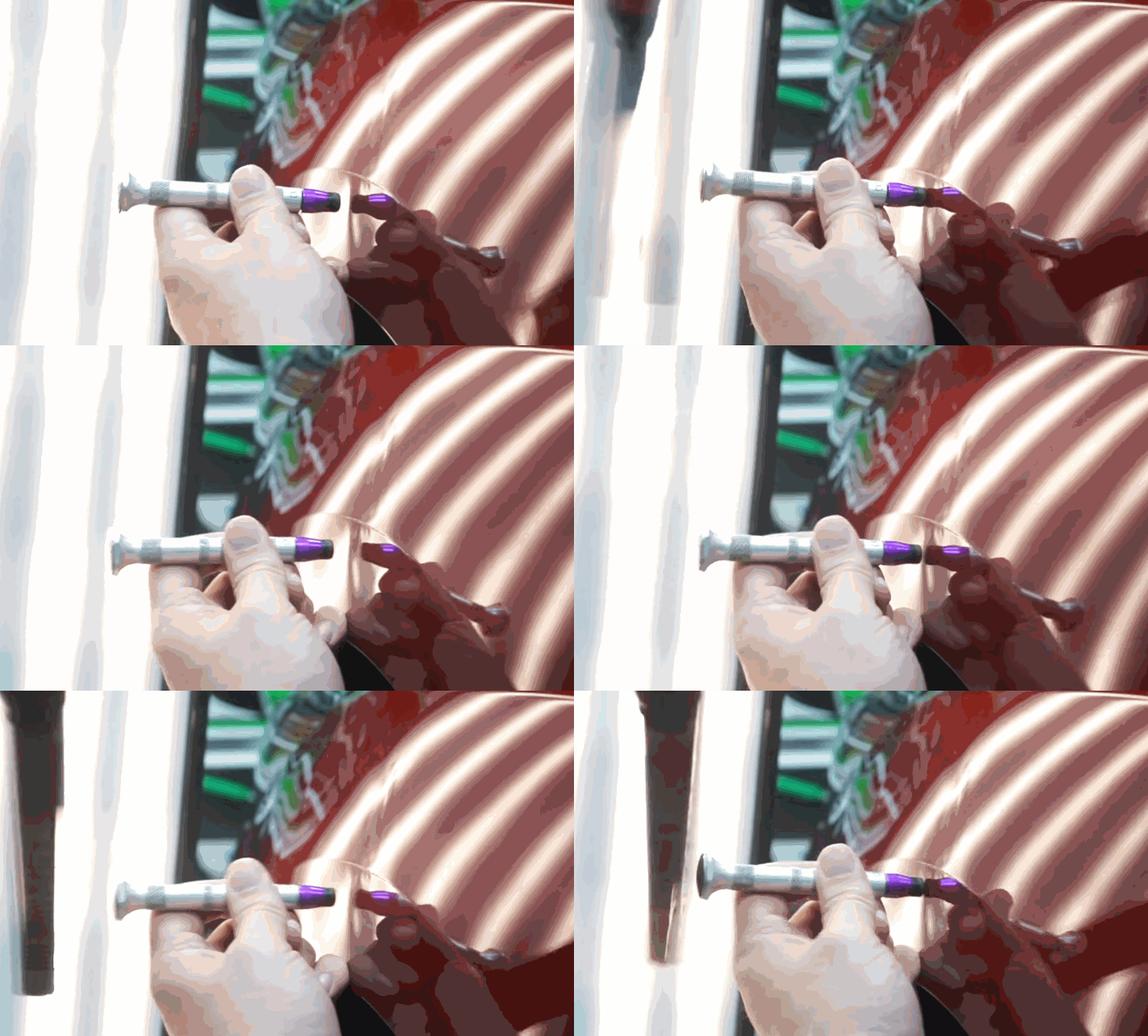
When you bring your vehicle in for professional paintless dent repair, the process is a lot more structured than most people expect. It’s not just about pushing dents out, it’s a step-by-step approach that ensures every detail is handled properly.
Here’s what a typical PDR service process looks like:
- Initial inspection to evaluate the extent of the hail damage
- A detailed estimate based on the number, size, and location of dents
- Careful access planning to reach affected panels without causing damage
- Precision dent removal using specialized tools and controlled pressure
- Final quality check under proper lighting to ensure a consistent finish
One of the biggest differences with professional work comes down to tools and technique. Proper lighting, for example, is critical. It allows us to see even the smallest imperfections and make precise adjustments during the repair. Without that level of visibility, it’s easy to miss subtle distortions in the panel.
At Pro PDR, we focus heavily on that level of detail. The combination of experience, tools, and controlled working conditions is what separates a high-quality repair from something that only looks good at first glance. When you’re dealing with hail damage, especially across multiple panels, that consistency matters more than most people realize.
Conclusion: A Smarter Way to Handle Hail Damage in Colorado Springs
Hail damage is simply part of driving in Colorado Springs, and ignoring it usually leads to bigger issues over time. What matters is how you choose to deal with it. Paintless dent repair offers a way to restore your vehicle efficiently while preserving what’s already working, your original paint, your vehicle’s structure, and its long-term value.
When you look at the reality of local driving conditions, from sudden storms to seasonal hail patterns across the Front Range, PDR stands out as a practical and reliable solution. It’s not just about convenience, it’s about making a decision that holds up over time.
If your vehicle has been caught in a recent storm or you’re dealing with existing hail damage, we’re here to help. At Pro PDR, we specialize in paintless dent repair in Colorado Springs and understand exactly what your vehicle has been through. Reach out to us today and let’s take a closer look at your car, we’ll help you find the right solution and get you back on the road with confidence.
Pro PDR - Paintless Dent Repair Colorado Springs - Hail Damage Repair

Address:
949 Elkton Dr Suite A, Colorado Springs, CO 80907
Phone:
(719) 574-5678
Google Reviews
Reviews from the web