
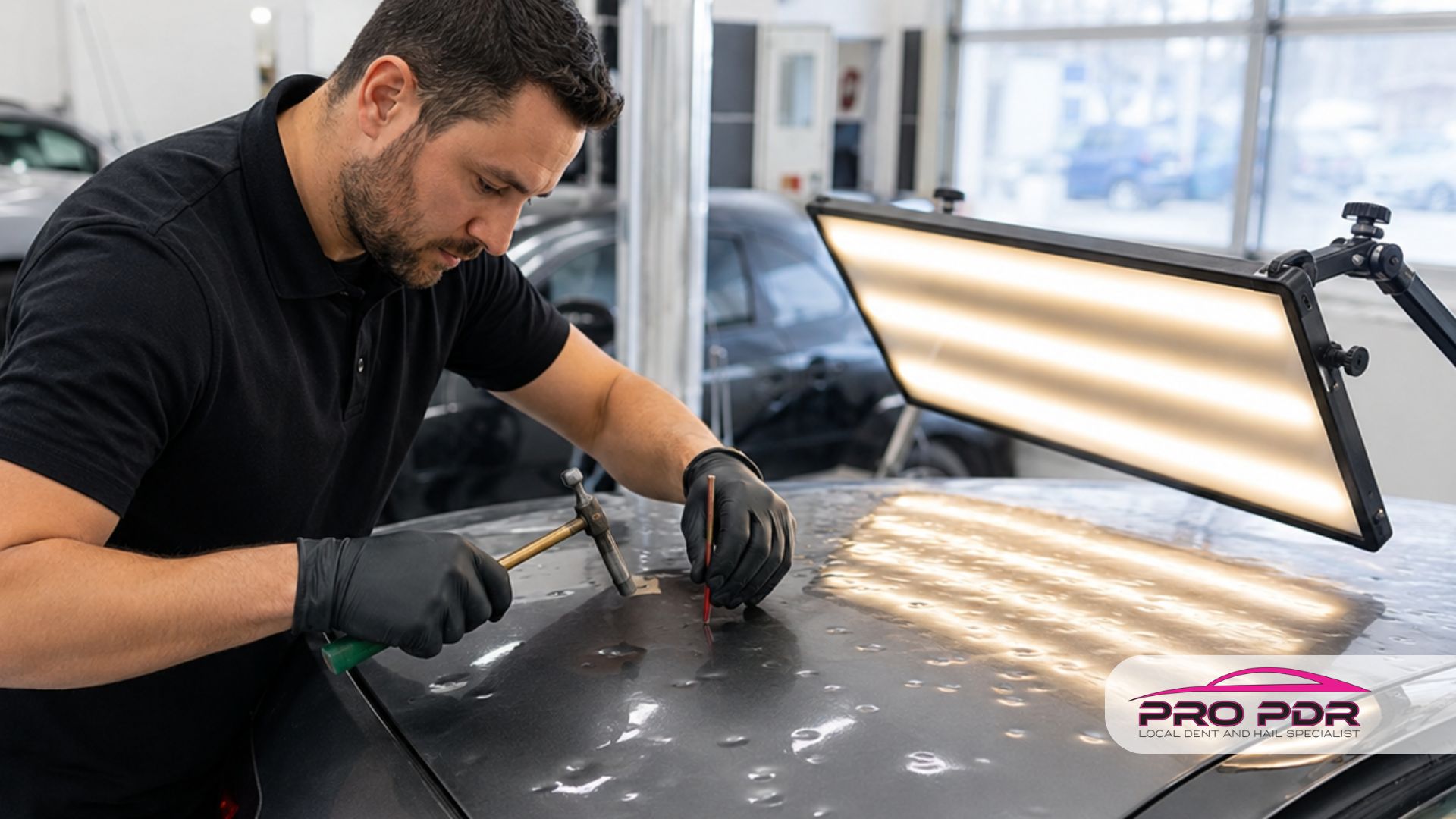
In Colorado, hailstorms are not rare surprises. They’re recurring events that drivers across Denver, Aurora, Colorado Springs, and communities throughout the Front Range learn to expect every year. What changes from one storm to the next isn’t whether vehicles get hit, it’s how people respond afterward.
One pattern we see all the time is drivers putting repairs on hold because the vehicle still runs perfectly fine. The doors open, the paint still shines from a distance, and the dents don’t seem urgent. On the surface, that logic makes sense. The problem is that the consequences of waiting often have very little to do with drivability.
This article isn’t really about the storm itself. It’s about what happens after. More specifically, what can happen when hail damage sits untouched for weeks or months because it doesn’t seem serious enough to address right away.
From our perspective as a Colorado repair team, we’ve watched countless vehicles arrive long after the initial storm passed. In many of those cases, the challenge wasn’t the original damage, it was everything that happened because repairs were delayed. Understanding that difference can help drivers make better decisions about hail damage repair after future Colorado hailstorms.
Why Minor Hail Damage Rarely Stays “Minor”
The word “minor” can be misleading when it comes to hail damage. A small dent might look insignificant while you’re standing a few feet away from the vehicle, but appearance alone rarely tells the whole story.
Many dents start as cosmetic issues. Then they spend months exposed to Colorado’s intense sun, freezing winter temperatures, summer heat, moisture, road debris, and everyday driving conditions. Gradually, those small imperfections become more noticeable, especially when light reflects across the damaged panel.
What we often explain to customers is that vehicles don’t exist in a controlled environment. They spend their lives outdoors, moving through constantly changing conditions. Because of that, even relatively small vehicle hail damage can become more difficult to address when ignored for extended periods.
Why delays often create bigger concerns
- Existing dents continue experiencing stress from daily temperature fluctuations
- Damaged areas may become more visible as surrounding panels age differently
- Future storms can overlap with previous damage and complicate repairs
- Vehicle appearance and perceived condition may decline over time
At Pro PDR, we evaluate hail-damaged vehicles throughout the year, and one thing consistently stands out: early action almost always provides more options. Whether someone ultimately needs extensive work or simple storm damage repair, addressing problems sooner generally helps preserve both the condition and appearance of the vehicle.
What Happens Beneath the Surface After Hail Impact
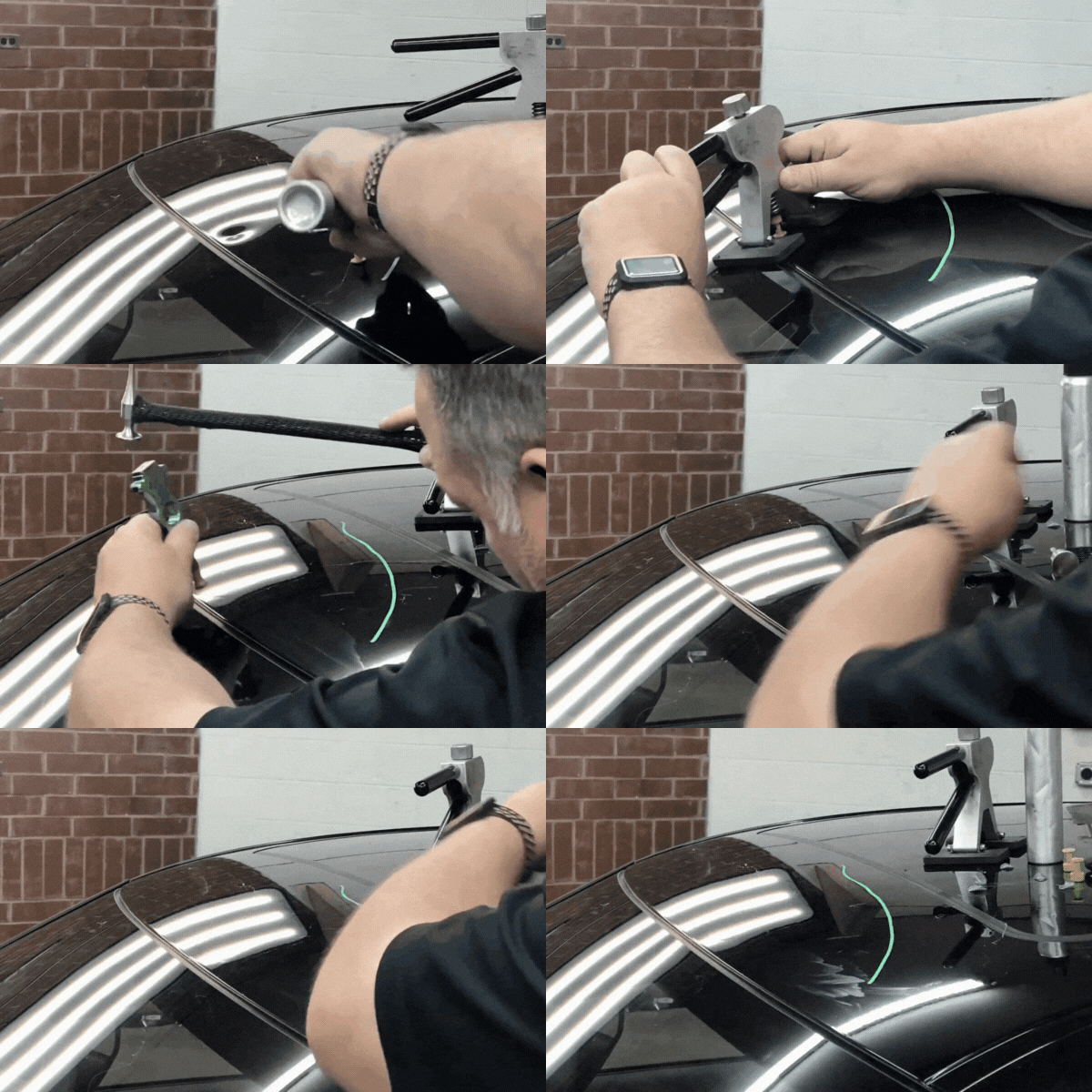
One of the reasons hail damage gets underestimated is because most people only judge what they can see.
A dent on a hood or roof panel might appear simple from the outside, but hail impacts create forces that affect more than the visible surface. Metal flexes. Paint layers absorb stress. Body panels react differently depending on their shape, thickness, and previous condition.
More than just a visible dent
When hail strikes a vehicle, the impact energy has to go somewhere. Sometimes that energy creates a clean dent that responds well to repairs. Other times, it places stress throughout the surrounding area of the panel.
Even when paint doesn’t crack immediately, microscopic weakening can occur within protective layers. In more severe cases, subtle panel distortion may extend beyond the obvious dent itself. That’s one reason why hail impact damage sometimes looks smaller than it truly is during an initial visual inspection.
This doesn’t mean every dent is hiding major structural problems. It simply means visible damage doesn’t always tell the complete story. Proper evaluations look beyond surface appearance to understand whether vehicle body damage or potential paint damage from hail could affect long-term repair outcomes.
Why Insurance Claims Become More Difficult Over Time
Repairs are only part of the equation after a hailstorm. Documentation and timing matter too, especially when insurance is involved.
The longer damage sits unaddressed, the harder it can become to clearly connect specific dents to a specific weather event. That doesn’t mean coverage automatically disappears, but it can create extra questions during the claims process.
- Damage becomes harder to tie directly to a particular storm date
- Additional dents from future weather events may complicate evaluations
- Supporting documents and photos become less effective over time
- Repair demand often surges after major Colorado storms, creating longer wait times
When filing a hail damage insurance claim, clarity helps everyone involved. Insurance companies, repair facilities, and vehicle owners all benefit when damage is documented while the event is still recent.
We’ve seen situations where drivers delayed getting a storm damage inspection, only to find themselves competing for appointments during peak repair season. Acting early not only helps with the hail repair estimate process, it often reduces unnecessary complications later.
Paintless Dent Repair Is Most Effective When Damage Is Addressed Promptly
One of the biggest advantages of Paintless Dent Repair is that it works with the vehicle’s original materials instead of replacing them. The process carefully reshapes damaged metal while preserving the factory finish, which is one reason it has become such a popular solution for hail-related repairs.
Timing plays an important role in that success.
Freshly damaged panels are often easier to evaluate accurately because technicians can clearly distinguish storm-related impacts and determine the best repair strategy. Waiting doesn’t automatically eliminate PDR as an option, but prompt action can help simplify the process and preserve repair flexibility.
Unlike conventional bodywork, paintless dent removal avoids sanding, fillers, and repainting when conditions allow. That means factory paint stays intact, vehicle value is better protected, and repairs can often be completed more efficiently.
At Pro PDR, we place a strong emphasis on detailed inspections before recommending any repair path. Our goal isn’t simply to remove dents. It’s to determine whether PDR hail repair is the right solution for that specific vehicle and to explain the reasoning clearly so owners understand their options.
When handled at the right time and under the right conditions, paintless dent repair remains one of the most effective ways to restore hail-damaged vehicles while maintaining their original finish and long-term value.
Colorado’s Climate Creates Ongoing Challenges for Damaged Vehicles
One reason we encourage drivers to take hail damage seriously is that Colorado’s environment rarely gives damaged vehicles a break. Unlike regions with more stable weather patterns, Colorado constantly puts stress on vehicle surfaces through seasonal extremes, temperature swings, and recurring storm activity.
Temperature Swings Matter
It’s not unusual for Colorado drivers to experience a warm afternoon followed by a significantly cooler evening within the same day. While most people notice those changes when choosing what to wear, vehicles experience them too.
Metal panels naturally expand and contract as temperatures rise and fall. When a panel already contains dents or weakened areas from hail impacts, those constant shifts can place additional stress on the damaged surface. Over time, this can make imperfections more noticeable and may affect how the panel responds during future repairs.
The same principle applies to paint. Even when damage initially appears cosmetic, changing temperatures can influence existing weaknesses caused by impact. This is one reason Colorado weather vehicle damage often becomes a longer-term concern rather than a one-time event.
Multiple Storm Seasons Add Up
Another challenge is that hail exposure in Colorado is rarely isolated to a single year.
Vehicles throughout the state often experience multiple storm events over their lifetime. A car that was hit by hail two summers ago may encounter another storm next season, then another a few years later. Each event adds another layer of stress to the vehicle’s exterior.
During hail season in Colorado, that cumulative exposure can complicate both damage assessments and repair planning. What appears to be one simple dent may actually be part of a larger history of storm-related impacts across the vehicle.
That’s why we often view repairs as part of a broader vehicle protection Colorado strategy. Maintaining a vehicle isn’t only about fixing current damage, it’s also about reducing the long-term effects of repeated exposure to the state’s challenging weather conditions.
💡 Curious about the cost of Paintless Dent Repair in Colorado Springs? Visit our main page for detailed pricing and estimates.
Delaying Repairs Can Affect Resale and Trade-In Value
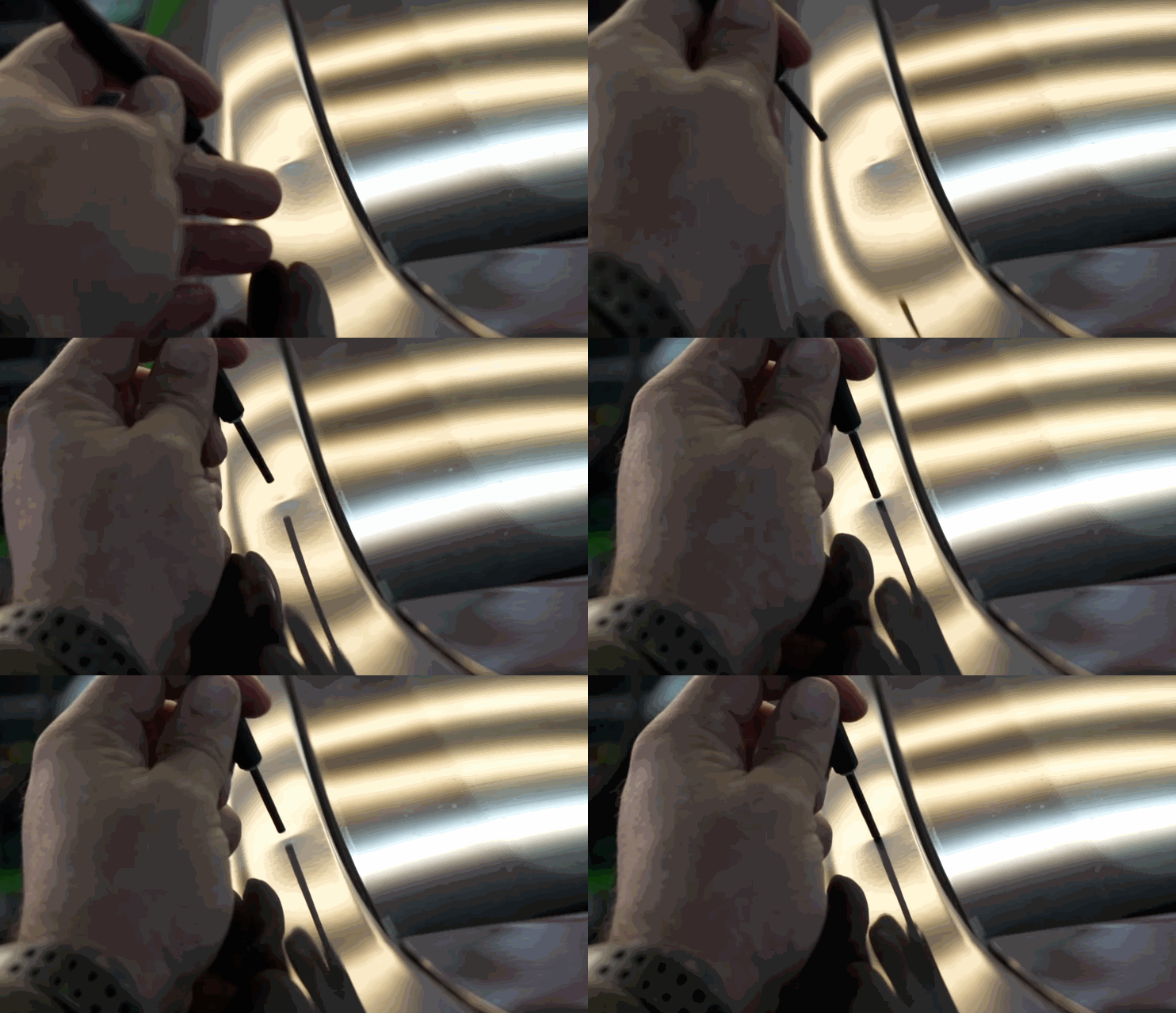
Most drivers think about hail damage in terms of appearance, but buyers and dealerships often see it differently. To them, visible dents can raise questions about how the vehicle has been maintained overall.
Even if the mechanical condition is excellent, exterior damage tends to influence first impressions. Potential buyers frequently assume that visible dents indicate neglected maintenance or unresolved problems, whether that’s actually true or not.
When it comes time to trade in a vehicle, dealerships typically conduct a detailed visual assessment as part of the valuation process. Hail dents are often included in those evaluations because repairs represent an additional expense for the dealer before resale.
Why appearance affects value
A vehicle’s condition is part of its marketability. The cleaner and more well-maintained it appears, the easier it generally becomes to sell or trade.
Visible hail dents can reduce perceived quality, influence appraisal figures, and make otherwise well-cared-for vehicles appear older than they really are. That’s why timely hail dent repair is often about more than aesthetics. It’s also about preserving vehicle resale value and supporting long-term car value protection.
At Pro PDR, we regularly work with customers who are preparing to sell, trade, or simply maintain their vehicles for years to come. In many cases, addressing hail damage early helps preserve options later, both financially and cosmetically.
A Simple Plan for Handling Hail Damage After a Storm
After a hailstorm, it’s easy to feel overwhelmed by the process. Fortunately, handling the situation doesn’t have to be complicated. A few organized steps can make a significant difference in both repair outcomes and insurance documentation.
- Inspect the vehicle once conditions are safe and look for dents, paint issues, or glass damage
- Take clear photos of all visible damage from multiple angles
- Schedule a professional hail damage inspection to determine the true extent of the damage
- Review insurance coverage and claim requirements if applicable
- Complete repairs before future storms create additional complications or overlapping damage
Following a structured approach helps simplify the entire hail repair process. It also creates a clearer path for insurance documentation and repair planning.
Most importantly, it helps drivers stay ahead of potential problems instead of reacting to them later. When it comes to vehicle storm recovery, proactive decisions usually provide more repair options, better documentation, and less stress overall.
Conclusion: The Best Time to Repair Hail Damage Is Sooner Than You Think
One of the biggest misconceptions about hail damage is that it can safely wait until a more convenient time. While that may seem reasonable at first, delays often create challenges that go far beyond the appearance of a few dents.
Over time, documentation becomes harder, insurance processes may become more complicated, and vehicles continue facing Colorado’s demanding weather conditions. What starts as minor damage can become more difficult to evaluate and repair simply because too much time has passed.
Prompt inspections and professional hail damage repair help preserve repair options, maintain vehicle condition, and support long-term value. They also allow technicians to determine whether paintless dent repair remains the best solution before additional factors complicate the process.
At Pro PDR, we’ve seen firsthand how much easier the repair journey becomes when damage is addressed early. Our team is committed to helping Colorado drivers understand their options, protect their vehicles, and make informed decisions after a storm.
If your vehicle has recently been affected by hail, don’t wait for the next storm season to arrive. Contact Pro PDR today for a professional evaluation, expert repair recommendations, and trusted Colorado hail damage solutions designed to keep your vehicle looking its best for years to come.
Pro PDR - Paintless Dent Repair Colorado Springs - Hail Damage Repair

Address:
949 Elkton Dr Suite A, Colorado Springs, CO 80907
Phone:
(719) 574-5678
Google Reviews
Reviews from the web